Musings, North Dakota Living

Lucy the Terrible

I moved to the oil field and decided I needed a guard dog. Not only would the extra protection be nice, but I could use a companion, someone to run with, someone to listen to my problems, someone who would always be there for me. Living on a farm makes having an animal quite easy, so the living arrangements wouldn’t be a problem.

I began researching guard dog breeds: German shepherds? They seemed pretty neat. Rottweilers? No, not furry enough for me. Labs? Although these have always been popular in my family, they’re not the protective type. Most of our labs would welcome robbers and riffraff with a wag of the tail and probably hold the door open for them. I was pondering this difficult decision when the answer fell into my lap one August day. My dad texted me, “Rachel, would you like a dog? A German shepherd puppy has been abandoned by your brother’s house.”

I could hardly say no. This tiny, four-month-old blob of fur had been left at Jack’s neighboring farm, which had previously been an unwanted animal drop-off site. Besides, it made my decision easy. I didn’t have to search for a dog at a shelter or buy a particular breed, and I could feel good about saving an animal and giving her a home.

Lucy, as I named her, quickly became part of my daily life. When I left her in the mornings for school, she would stare at me forlornly from the yard. When I came home, she would accompany me enthusiastically on a 30-minute walk on a dirt trail before I began cooking dinner for the boys. She was rambunctious, outgoing, and irresistible. Everyone grew to love her, including Jake, our yellow lab, and Abby, my dad’s black lab (although she took a little longer to come around).

IMG_0530

Lucy is cute, I will give her that. She has the right coloring for a German shepherd, her distinctive black-and-tan face made especially expressive by markings that look like raised eyebrows. As she grew, however, eventually becoming taller and lankier than our other dogs, it became clear that she was no purebred German shepherd. Part German shepherd, certainly, but her ears stayed floppy like a lab’s, her tail curled over like a husky’s, and she doesn’t have the body type. She looks like a conglomeration of different breeds.

IMG_0485

Even more, it became quite clear that she is no guard dog. If I ever go out into the yard at night, Lucy is the opposite of helpful — she actually scares me more, jumping at every tiny sound and staring intently into the dark before bolting back into the garage to hide in the corner. Very reassuring when you are outside in the dark with the wind blowing eerily in the trees. I once found myself hiding in a locked house with a shotgun, and I blame the incident entirely on Lucy.

So what is Lucy good at? They say certain breeds are happiest when they have a “job,” a dog career of sorts, whether it’s hunting, herding, guarding, guiding, or policing. She’s no cattle dog: We have no cattle anymore. She’s no guard dog: That’s been proven. She loves to chase up birds, but she’s no hunter: She won’t listen. In fact, Lucy is just plain naughty. She chews up boots, eats rotten grain, drags the little barn cat Saul around the yard, visits the neighbors miles away, leaves dead birds at the bottom of my stairs, poops in the garage on a regular basis (even when the garage door is wide open), barks nonstop at the horses every morning, and wrestles the other dogs relentlessly. My family loves to tease me about how terrible she is, and I have to admit that it’s somewhat true. She’s been trained; she knows how to sit and lie down and stay and come, but life is just too interesting for her to care much about all that boring stuff. Lucy the German Shepherd conglomeration mix is probably better labeled as Lucy, the Terrible.

I love her anyway, of course.
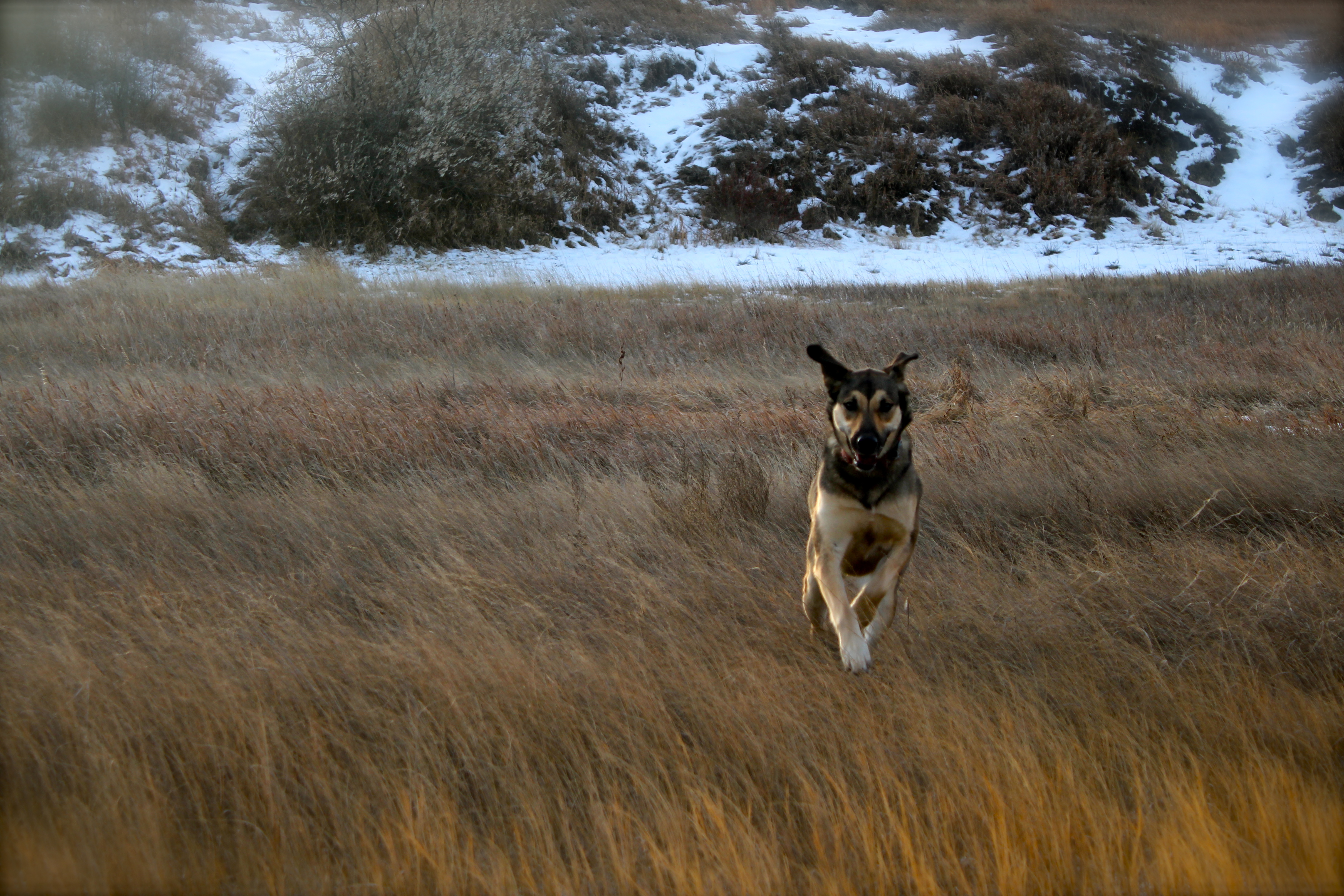
IMG_2118

But at last, this spring, Lucy has found a job. She has actually turned out to be somewhat useful.

Another one of our ill-behaved animals, Chico, a 12-year-old Morgan horse, has figured out how to get out of the small pasture east of our farmyard. We don’t know how. The fence isn’t down. The other horses stay put. Two weeks ago, for example, I was pulling out of the yard to go to school, when I noticed him standing in the yard nonchalantly, trying to blend in as if nothing was out of order. (I did the logical thing: Called my brother to go put him back.)

This is where Lucy comes in. Ever since we brought the horses to winter in our yard pasture, her obsession with them has been almost unhealthy. She cannot leave them alone. Every morning, she barks at them for long periods of time. Some mornings, she herds them into a group or chases an individual horse just for fun. I shake my head every time I notice it. She’s going to get herself killed someday, I think. But through this obsession, she has become Chico’s personal sentinel. It’s wonderful. He gets out; she barks like crazy and keeps him at the fence. He gets out; she chases him across the yard to where he is supposed to be. The other day, Danny was trying to get him back into the gate. Chico wouldn’t budge. Danny called Lucy. Chico took one look at her flying across the yard full of fury and decided he would be better off in the pasture after all.

If only she would spend as much time guarding me as she does keeping Chico in line.

Chico, of course, doesn’t appreciate Lucy at all. But she’s turned out to be quite useful in this one regard. I can finally say, Lucy the Terrible may actually not be so terrible.

On a side note: Does anyone have a guard dog for sale?
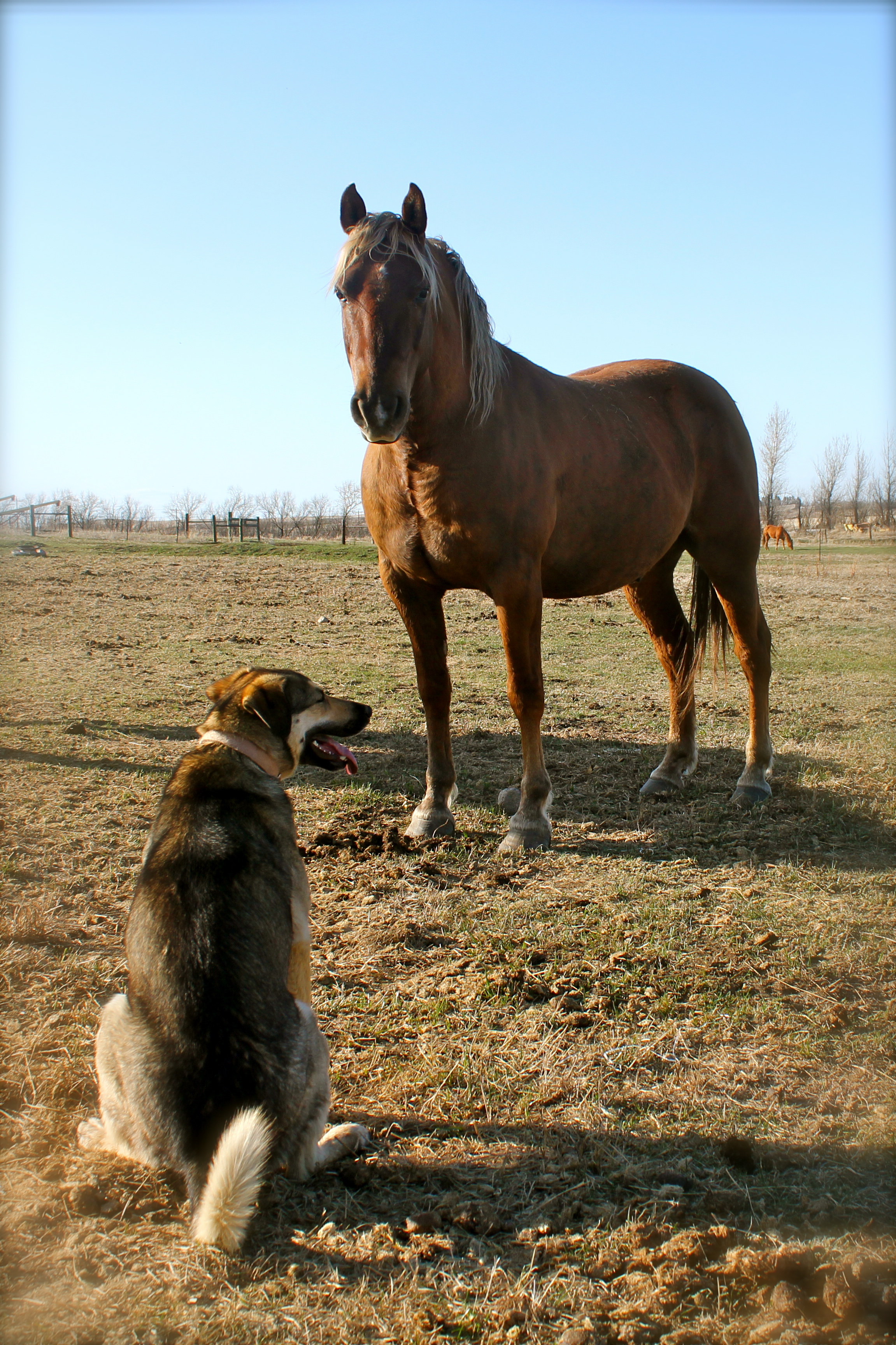
Lucy the Terrible keeping a close eye on Chico.
Lucy the Terrible keeping an eye on Chico.
Musings, North Dakota Living

Oil Field Dating Service

This morning, I had a rather unusual commute to work. I was only a few miles away from home around 7:45 a.m., waiting to make a right turn onto Highway 85. The long line of semis and pickups with a car or two sprinkled in trickled by slowly in the early morning light, cautious on the layer of ice from last night’s snowfall. I sipped the coffee from my travel mug and vaguely noticed a large cherry red pickup with dark tinted windows suddenly make a sharp left onto my road. I perked up a little more when it pulled up next to me. A young man got out and swaggered confidently toward my vehicle. I assumed he was asking for directions, but I didn’t like the looks of him much, so I rolled down my window only a crack, ready to throw my coffee in his face and barrel through the ditch in my little Ford Escape if necessary.

It turns out he was not asking for directions. Ohhh, no. Our conversation  went something like this:

Him: “Hello, miss? May I have your number?”

Me: “Excuse me?”

Him: “I said, may I have your number?”

Me: Stunned silence. Isn’t it too early in the morning for this kind of thing?

Him: “My friends said they would give me 100 dollars if you gave me your number.”

Me: Stunned silence with raised eyebrows. “Uh…” I am not very often speechless.

Him [starting to sound more desperate]: “You can have half of it! I will give you 50 bucks right here for your number!”

Me [inching my car forward]: “Fifty bucks?” [Sadly, I considered the money for a moment, then thought better of it.] “I don’t think I believe you. Actually, I have to go to work.” [Inching my car forward some more, wishing there were a gap in the traffic line.]

Him: “Miss, please — it’s fifty bucks! Aw, c’mon, please!”

At this point, I would have loved to make a dramatic exit by pealing out onto the highway in a squeal of tires on pavement. Unfortunately, the steady line of trucks still trickled by, not allowing me an exit of any sort, dramatic or not. I think I said something like, “I’m very flattered, but I really have to go to work!” I attempted a smile to make my harsh rejection a little easier. “It was a nice try though!” I added as an afterthought. I rolled up my window in what I hoped was a firm gesture.

He made his way back to his red pickup where I am sure his friends were laughing uproariously, his swagger a little less confident.

I got different reactions to this story from the people I told. Some thought I should have taken the money. Some thought I should have given him a fake number. Some agreed that I did the only thing I could have done: leave. My brother, however, pointed out that his approach was all wrong. “He made a mistake,” he commented. “He SHOULD have said, ‘My friends offered me a hundred dollars to ask for your number, but I don’t care about the money. In fact, I will give you the hundred dollars because all I really want is your number.'” It’s true; that would have been a much smoother attempt. Should I be insulted that he offered me money in the first place, or that he only offered me HALF of the money?

Jokes aside, this incident made me think a little. We have some serious issues in the oil field: housing, traffic, infrastructure needs, you name it. Dating is a whole new ball game, and while it may not seem so serious as these other issues, doesn’t everyone need just a little affection from the opposite gender now and then? But there is a problem: men outnumber women here by A LOT. The few available girls that are not married are either 1. dating someone or 2. tired enough of the obnoxious male attention to be a bit cold and standoffish to the males providing the attention. (For some additional background, see my previous post titled “There Are Plenty of Fish in the Sea, but Mostly Sharks Where I Live.”)

The men at my second job at a local hotel lounge have shared plenty of these woes with me, and I feel for them. Just last night, a middle-aged man lamented, “It’s not easy being a single guy in the oil field.” Another one, this one a bit younger, said to me, “You’re a nice gal. But I bet you’re married or got a boyfriend or something, don’t you?” A man next to him added ruefully, “There aren’t ANY single girls around here!” I found myself wanting to help these poor lonely souls, but what can we do? Should we start a mail order bride service? Lure fellow females here by some other method? Last year, a man even planned to have a “Party in the Patch,” a singles dance in Williston to attract dateable girls to the area. To my knowledge, the party never happened, but I think it illustrates a pretty desperate need for better balance of gender. (Read the article here.)

These ideas are extreme, but there just might be another, simpler way. A few months back, my friend A, another teacher, thought of an excellent plan: An Oil Field Dating Service. I think this could be a new calling for us. “Just think,” she said, “how much better off some of these men would be if they even just knew how to ask a woman out!” She wasn’t thinking along the lines of a matchmaking service, but more of an… etiquette workshop of sorts. Lessons on making a first impression on a woman. How to be a gentleman. How to woo the few available ladies here with your charm and wit. How to show manners and therefore have the upper hand over all your rivals.

It’s not a bad idea. I think we could do some good here. Maybe even charge a fee and make a little extra cash, without having to give out our phone numbers on random highways. I have heard a colorful array of pickup line since moving here, and I’m sure other females in the area would concur. Some situations are humorous, others not so much. But what if we could give these men a few tips from a local woman’s point of view? Here’s a start: Don’t offer money for phone numbers in the middle of a highway.

Just don’t.

Ok, I should put in a disclaimer: I think there are plenty of courteous, well-meaning men here. Just a couple weeks ago during my hotel shift, a man in his mid-30s observed as two other, rather forward men made an uncouth comment or two in my direction. It didn’t bother me, but apparently it bothered the observer. After they left, he stood up, quite tipsy, and threw down his napkin, proclaiming gallanty, “I just want you to know that although I think you are beautiful, I’m just going to leave it at that! I’m not coming on to you, and I would never say those things to you!” He left, head held high, stumbling just  slightly to his hotel room. I had to smile to myself a little at that one. But his manners actually DID impress me more than the other two men next to him. Maybe this guy could be a coach at our Dating Service once he sobers up.

Yes, times are tough in the oil field. Women are scarce. Men are lonely. Both are working hard to make a living, but humans need a little more than just survival. Hopefully as our boomtown continues to adapt to the growing pains, the lopsided numbers will even out a bit and love will flare up all over the oil field (pardon the pun — I admit, it was bad).

In the meantime, I’ll be working with my partner A on our Oil Field Dating Service so we can provide a valuable service helping our community… one unfortunate pickup line at a time.

Musings, Teaching

Out of the Mouths of Babes

Repeat after me: “We do not have hurricanes. We do not have hurricanes. We do not have hurricanes.”

I saw that little quip online this morning and I thought it was funny. Blizzard conditions are currently raging outside. It is the middle of April. There has to be a positive, even if it’s acknowledging that hey, at least in the Great Plains we don’t get hurricanes, too. I’ve mentioned before that I love winter, and I do, but that’s when it stays inside the confines of winter. We are almost a month into spring with only a few warm teasing days, and I think I speak for everyone when I say a little break would be nice. The kids are getting antsy at school. The farmers are getting antsy for spring’s work. Even the tractors look antsy. Outside my window, our big red is sitting in the snow, ready for seeding. But he’s not going anywhere. Just like me.

IMG_2314

Until winter decides she is ready to release us, we wait. And keep repeating, “We do not have hurricanes.”

Meanwhile, I thought I would occupy my time indoors by reading through some of my most recent freshmen essays, and I thought I might share with you some of the wisdom out of the mouths of babes. In this essay, I asked my students to address a problem in our school or community and propose a possible solution, using both their own wisdom and outside sources. While they are not exactly “babes,” freshmen in high school are fairly new to exploring and writing their ideas clearly and logically. It can be a real struggle, let me tell you. Why shouldn’t they be able to demand that school is canceled forever for all students? Why shouldn’t they be able to ask for a Six Flags amusement park in their small town in western North Dakota?

We spent some time in class discussing feasible topics. Once we eliminated the topics that were a little too unrealistic, many of my students really embraced the project with alacrity. Whether they care to admit it, they are concerned about their community. In reading through the essays, I discovered that young teenagers can be remarkably perceptive in understanding the real issues surrounding them. They addressed everything from the dangers of our roads to the need for more emergency personnel in the oil field, and less serious topics such as adding more restaurants or community activities in our small boomtown to improve the overall quality of life. Some of their arguments:

  • “[Our community] should hire a full-time fire department because our local firemen are overworked. Our fire department is run on a volunteer basis, which means in addition to all the hours these men are on call, they also have to maintain full-time jobs.”
  • “If major highways like 85 and 23 were four lanes, there would be less congestion, which would make people feel less likely to pass.”
  • “I want our high school to start a recycling program.”
  • “If we built a new Civic Center, it would be a great place for kids to hang out… Right now, our town has few places for us kids to get together, so more kids are getting into trouble.” 
  • “Having a bowling alley in Watford City could involve all ages in the community. Having leagues would allow kids and adults to compete and have fun at the same time.”
  • “Fixing and repaving the roads will be very beneficial… Drivers will have less of a chance of hitting an obstruction, such as a pothole, and going into the ditch or other lane.”
  • “Having more restaurants with different types of food would make it easier on our travelers and truckers.”

They had some decent ideas, actually. The state of North Dakota is scrambling to keep up with the massive demand of an increased population: housing shortage, services shortage, and higher rate of crimes and traffic accidents, among other things, and it’s obviously not an easy job. However, the fact that my students were able to identify some of the serious and the less serious problems in their community and propose meaningful solutions made my chest puff up a little with, well, pride. 

But lest you go around amazed at my teaching skills and ability to coax well-written essays out of previously clueless students, something like the English teacher in the film Freedom Writers, let me share that it’s not quite like that. Not all of my students are so, well, eloquent. Here are some from the other side, some that help keep me humble as a writing instructor, so my head — and my ideals — don’t get too big.

Sigh.

  • “It would benefit our community by having the speed limit set to 65 instead of 45 close to town and will help the people on the bus so we can GET HOME FASTER.” 
  • “When the roads are in bad condition, a lot of people complain about it but don’t do anything. When people get blamed, a lot of fighting starts to happen. So better roads would reduce the number of fist fights.”
  • “I think it’s horrible the smokers got our open lunch hour taken away. We are all teenagers and we like our freedoms. If we can make a deal with the school board, we will!!!”
  • “If you wear something that isn’t dress code you get in trouble. Kids don’t like to get in trouble. It makes them sad and agitated. In conclusion, dress code makes children unhappy. It brings unhappiness to the world and needs to be stopped.”

And my personal favorite: This student had found a hair in his food at lunch one day, so he based his entire essay around this apparently traumatizing event:

  • “If a lot of hair is in your food it could make you constipated. If you get constipated, you will have to go to the doctor for medicine and the bill can be more than some people can afford. [Also] I puke after I find hair in my food, so you know that hair can’t be good for you. If the food tasted better, we would probably eat more and the school wouldn’t have to buy as many garbage bags. With the money that we saved from the garbage bags, we could buy even more hair nets.” 

Dramatic? I would say so. Although I had a hard time appreciating the logic of the arguments in this essay, I admit finding that unknown hair is never fun. (In this particular case, I suspect some of the student’s friends as the hair culprits.)

I do enjoy my students and their various colorful ideas, even the not-so-eloquent ones. In my classroom, we’ve had many discussions over issues like these, inside our small community and across the state and even the country. Students keep our jobs as teachers interesting, and as long as we stop to hear what they have to say, we may be surprised, even pleasantly surprised. Try it sometime. Listen to a kid. Heck, listen to another adult. In our crazy piece of land called the oil patch, it’s worth hearing some of the stories that people have to tell, some of the places that people are coming from.

This April storm outside my window, however, is not much of a pleasant surprise.

We do not have hurricanes…

Musings, North Dakota Living

One of Our Own

I wrote last time about the dangers of driving on our roads. A few days later, in a sad irony, those very roads took one of our own. It’s different then. When I see in the newspaper every week the accidents and deaths on the oil field highways, I feel sympathy, but a distant sympathy. I don’t know them. They don’t know me. They usually hail from states like Arkansas and Washington and Wyoming. I feel bad for their families for a fleeting moment, and then I move on to the next story. It’s hard not to become a little numb to all the accidents when they happen so often.

This time, it’s different. This time, it hits close to home.

On March 23, a sunny Saturday morning, my cousin Rory was killed in an accident with a semi on a major highway only miles from our farm. Rory was 30 years old, a young 30. Sometimes he seemed more like 22 or 23. He had lived in the oil field for the past two years, originally hailing from Reno, Nevada, but always connected to western North Dakota and especially his Grandpa Tom, an Irish farmer who was a lifelong native of the area. Rory came here to stay in 2011, the same year I did, and quickly made a name for himself with his love for action and persistence to engage anyone and everyone around him in a debate. Locals began to recognize his boisterous laugh and crooked hat. He lived in his little four-room cabin in the bottom of a tree-filled break, drove around a dusty Dodge Neon or one of two old pickups — depending on the day — and took his dog Holiday with him wherever he went. Rory was especially close to two of my brothers. I have to admit, Rory wasn’t always on my good side. He liked to push my buttons and more often than not, I allowed him to, but in the end Rory was a loyal cousin and friend. We had a couple good conversations that last week when he came in visit during my shift at the hotel, the last time I talked to him before his accident. Of course, he didn’t leave that night without one last debate between us: this one over the pronunciation of Phuket, Thailand. (Our debates, as you can see, often involved matters of little to no real importance.) I don’t think we ever figured out who was right… Oh well.

I wish I could write everything I want to write about Rory. I spoke some words about our friend-foe relationship at his family service, and I think that’s where those words will have to stay. For now, I have had my fill of memories and sad farewells. But I don’t feel I could continue to write a cheeky blog about the oil field without recognizing some of the harsh realities, the losses that we experience in the untamed face of progress. The oil field is bringing our area a lot of possibilities and exciting opportunities. But sometimes… sometimes it takes just a little too much in return.

Rory is lying at rest next to his Grandpa Tom in a small western North Dakota cemetery, only yards away from my own Grandpa Tim and Grandma Marjorie. They lie there under granite headstones, memories of the past homesteading days and casualties of the current energy-producing madhouse. They lie there as reminders to give what we can, remember those who have gone before us and most importantly, appreciate the ones still left around us.

Because sometimes, we don’t think about those things enough until it’s one of our own who reminds us.

When my Grandma Tim died in 2005, I wrote a poem that was inspired by his life in western North Dakota and, more specifically, the small cemetery where he is buried. I thought it was fitting for Rory too, so I’m sharing it below.

Prairie Winds 

The meadowlark is singing, singing sweetly sad its song
Its melody is simple, caring not for right or wrong
How can it know of mortal pain
When singing sweet its song?

The prairie wind is blowing, breezing softly by the bales
The grasses dip their heads before its never-ending gales
What does it care for life or death?
Its forces never fail.

The endless sky is stretching, sunlight sinking to the west
It glows upon a graveyard where beloved lie at rest
It shines there but a moment
And it gathers to the west

A man is but a memory, a twinkling of the eye
His time is like the prairie wind, a softly fading sigh
Only he can sing his song before he passes by
And goes to meet his Maker in the endless prairie sky.

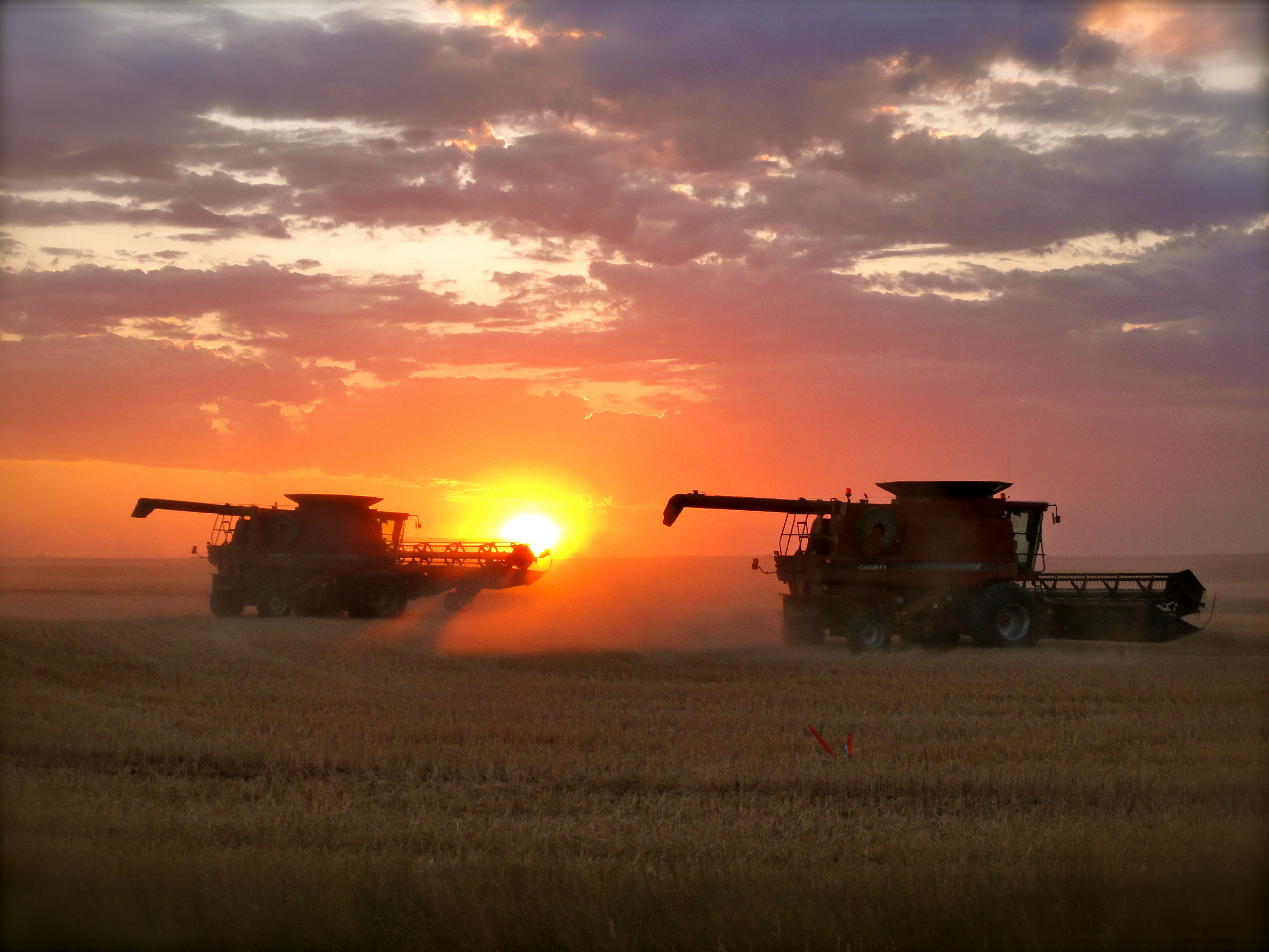
Rest in Peace, Rory. Here’s one last North Dakota sunset for ya.

IMG_0592

Musings, North Dakota Living

Rules of the Road, Oil Field Edition

Lately, our highways in the oil field have been getting more media coverage with the increase in accidents, traffic congestion and difficulty of travel in winter weather. This topic is nothing new, but I thought I would throw together a little list of “Rules of the Road: Oil Field Edition.” Young drivers in our state have to study the Rules of the Road handbook when they prepare to take a permit test. Maybe drivers should have to study a new set of rules when they move to the oil field. It doesn’t hurt to be prepared. Drive here for long, and you will probably end up with a handful of crazy stories and close calls.

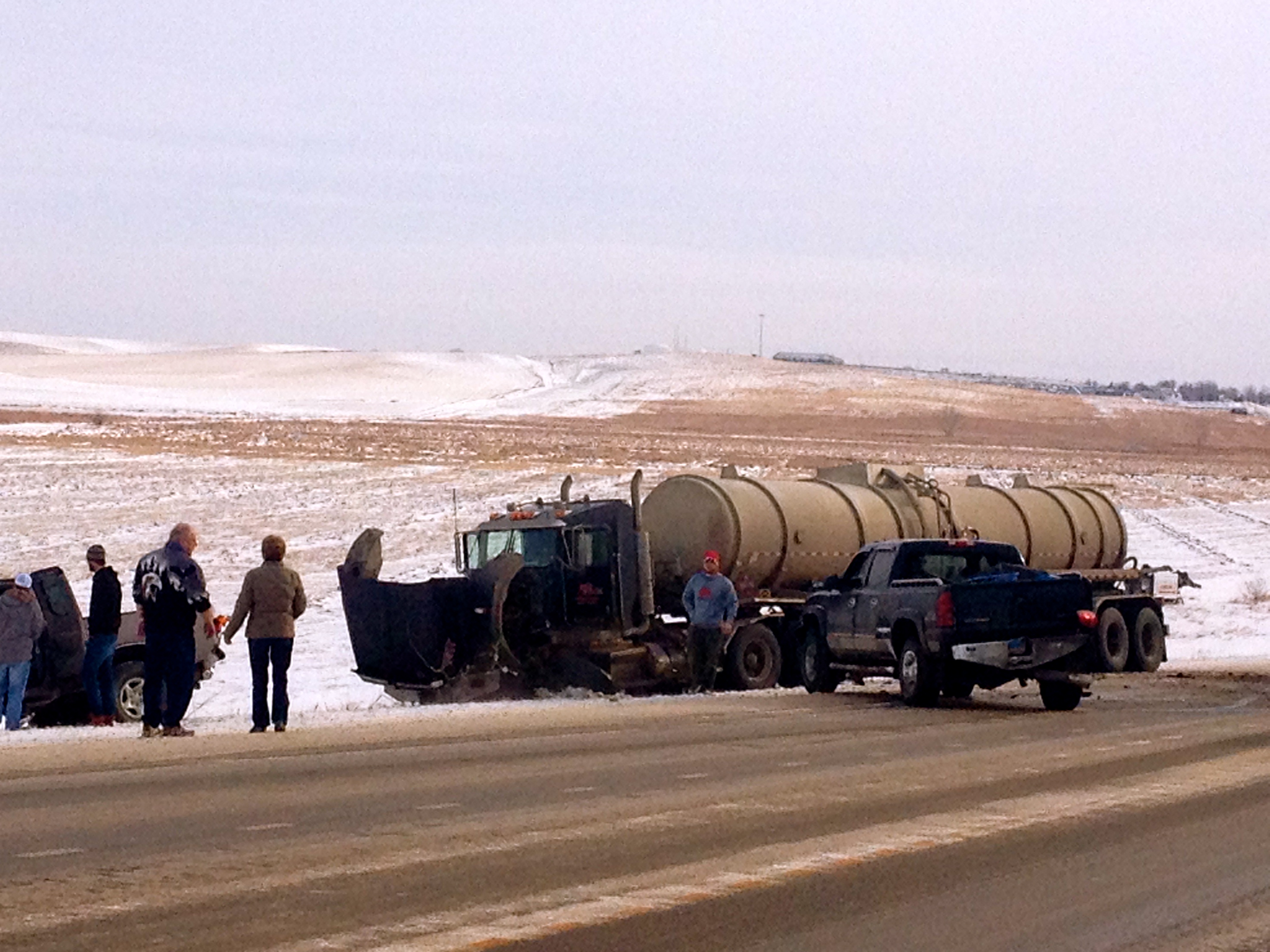
Just one of many oil field accidents

For example, I mentioned the pickups passing me on glare ice in my last post. Another case in point: A few Saturdays ago, I drove my little bus crammed full of speech kids to Mott, ND; and somewhere around the first crack of daylight and my 15th yawn, I watched a pickup in front of me attempt to pass a semi uphill and in fog so thick you could cut it with a knife. Of course, a pair of headlights came straight at him out of the fog, and he was forced to take the ditch. Thank goodness the oncoming vehicle didn’t take the same ditch at the same time, or they would have collided right to the left of us.

These incidents have got me thinking about the changes in our previously quiet little Midwest corner. It’s not simply an issue of “traffic” like they have in larger metropolitan areas; and of course, crazy drivers exist everywhere. It’s more the issue of the traffic’s makeup. It’s the thousands of semis, pickups, and more semis crammed onto two-lane highways that were not built to accommodate them. According to a recent edition of the McKenzie County Farmer, up to 12,000 vehicles a day pass through the nearby little town of Alexander. Who could have predicted such a dramatic turn? I remember once about 12 years ago, my Grandpa Tim, an old farmer from the area, commented to me, “Boy, Rachel, I sure saw a lot of traffic this morning. It’s getting crazy around here. I counted seven vehicles on the way to town!” (He lived three miles out of Alexander.) I laughed then, but part of me wonders what he would think about the current state of his hometown if he were around to see it.

Anyway, back to the driving advice. Here are just a few Rules of the Road, Oil Field Edition:

1. Avoid Left Turns Whenever Possible: Left turns are dreaded here!  You might sit for half an hour waiting for your chance to break through a traffic gap. If you are forced to make a left turn on any well-traveled highway, keep one eye on your rearview mirror, lest one of the semis barreling down upon you doesn’t notice that you have stopped to turn left. Yikes. Gives me the willies every time.

2. Know the Back Roads: You never know when you might need them. Back roads have saved me hours of waiting behind accidents and traffic jams while trying to make it to work or back to my farm. Even hearing the words “back roads” gives me warm fuzzies (kind of like the words “left turn” gives me willies: see Rule #1). Do some back roads exploring even when you don’t need to. It might save you a major headache tomorrow or next week.

3. Ignore Rock Chips As Long As Possible: Rock chips WILL happen. Currently, I have 6 or 7 cracks in my windshield. But if I rushed in to replace it, another one would most likely appear within a week or two. Truthfully, your car will mostly likely not look as pretty after some time in the oil field. Besides the rock chips in your windshield, you may have rock chips and dents on the body of the vehicle, a thick layer of mud or dust that returns the day after you get a car wash, and other unsightly oil-related things. Recently, on a new semi driver’s first day on the job, he accidentally drove his tanker through town (a big no-no and a $500 fine; they are supposed to use the truck bypass), ended up stuck in the high school school parking lot, and struck and dented one of my student’s vehicles trying to turn around. This proves your vehicle may not be safe anywhere.

Poor guy. Hope he found a new job by now.

Really, you should not bring your new shiny vehicles to the oil field if you care about the aesthetic appeal. Although I love my little gray SUV, the good news is, I have grown up in a family who has never wasted much time or concern on the outer appearance of vehicles. My dad is a pretty well-known lawyer in Bismarck and still drives around old Buicks with the mirrors duct-taped on. I wish I had pictures of the collection of vehicles he has driven around or parked in front of our house. Once, I saw a little car sputtering blue smoke in Bismarck. I chuckled, and then when I got closer, realized it was none other than my dad driving my old high school vehicle, a Plymouth Reliant. All I could do was shake my head. The old Reliant didn’t last much longer after that.

I digress, but the point is, leave your shiny vehicles at home if you want them to stay shiny.

4. Finally, Avoid Road Rage Whenever Possible: Yes, you will have bad experiences. Yes, semis will pull out in front of you; pickups will pass you only to turn a half mile later; other pickups will pass you on glare ice and uphill in the fog. It is even worse when you attempt to move farm equipment that tops out at 20 mph. Then people REALLY get mad. (I will have to write more about that later.) But as the popular slogan plastered all over the Internet these days says, just Keep Calm and Carry On. I may or may not have given in to righteous anger on the road a time or two, but it’s not worth it. All I can say is, follow a few basic guidelines to best avoid road rage: hug the white line, keep your distance, and ignore the idiots as much as you can.

So there you have it. Four basic rules, but they may save your life, your sanity, or a few minutes of your time. There probably isn’t much we can do about the traffic, but we can do our parts as drivers to make the oil field a safer place. Hopefully, the state of North Dakota will continue to pitch in throughout the duration of the oil boom in an ongoing effort to improve the quality and capacity of our highways. Meanwhile, keep up the good fight out there on the highway… and wave at me if you can see me through the rock chips.

Musings, North Dakota Living, Teaching

Snow Day with Capital Letters

A Snow Day. I cannot believe it. I’m so in awe, that I’m honoring the Snow Day by capitalizing it. (That is how an English teacher uses the tricks of the language to show appreciation. Or proves herself to be a giant dork.)

Our frosty farm, location of my Snow Day

This morning when I saw the voicemail on my phone from the familiar 444 school-alert number, my heart skipped a beat. But for all the times the voicemail notifications from the 444 number have appeared before 7 a.m., my hopes for a Snow Day never come true. So I listened to the voicemail eagerly, hoping at least for a late start that would allow me to sit and drink coffee at my kitchen table, a nonexistent treat during the work week.

It was even better than I had hoped: a real live Snow Day! I know that we will have to make it up sooner or later, probably at the end of the school year, but whatever. For now, it feels glorious. It’s like a present when it’s not even your birthday. It’s like a second Christmas. It’s like receiving a package in a snow-covered mailbox.

IMG_2272

It’s like a warm summer morni– No. Too far.

I will say that Snow Days as an adult are a little different than they were growing up. Snows Days now come a little less freely, a little more burdened with grown-up responsibilities. I am not complaining, mind you. It’s just that now, Snow Days are a chance to catch up on chores and duties (yuck) that otherwise I wouldn’t have time to do. So, this morning after listening to the voicemail, I thought about basking in Snow-Day-ness by lying in my bed for another couple hours, then drinking coffee at my kitchen table for another couple hours, then immersing myself in my guilty pleasure, Pinterest, for another couple hours, then perhaps painting my nails a bright coral, and then… Well you get the picture. But an image popped into my mind: a stack of 16 research papers at school, sitting untouched, the only 16 remaining ungraded papers of the 60-some I collected a week ago. And a whole day of free time to work on them. Yuck again. But the image wouldn’t go away. So recklessly, I bundled up, went out into the snow to feed my dogs, and started my sturdy little Ford Escape to make the 13-mile trip to town to collect my grown-up responsibility.

No blizzard can keep an English teacher away from her true love, a stack of research papers.

IMG_2276

Actually, that is not true. Grading research papers is not enjoyable. Of all my English teaching duties, it is my least favorite. But it’s also a duty I feel compelled to do, so every winter I spend a unit teaching freshmen the ins and outs of navigating the library and using MLA style and citing sources properly. It’s usually quite a mess, but if my students even come out of the unit with a somewhat-readable paper and an understanding of the word “plagiarism,” I feel I’ve accomplished something.

This morning, my motivation for driving to town in a blizzard was not so much for my students’ greater development in the world of research; but selfishly, the thought of getting the weight of the remaining ungraded research papers off my mind was just too irresistible to ignore. So to town I went. It really wasn’t that bad despite the hours of freezing rain we got overnight followed by hours of blustery snow this morning. I had to go 25 to 30 mph, but there were few vehicles on the road and even fewer trucks, a major relief. Of course, there is always the one idiot. Or two. On my way to town, I was passed by a pickup going about 50 on glare ice. Not smart. When I got to town 5 minutes later, he was only two vehicles ahead of me. Worth it? I think not. On the way home, I was passed by another pickup on glare ice. A few miles later, of course, he was backing out of the ditch. What is it with these guys?

I made it safely there and back, though, mission accomplished and research papers on the seat next to me. Once I got near our farm, our own road was nice and quiet, and the ice and snow stuck to the tree branches was so pretty I had to delay grading for a few minutes to take some pictures. It might be almost spring, but I still love winter storms. This one is even more bearable because we know that spring weather is indeed lurking somewhere around the corner, even a distant corner, and we won’t have many more of these blustery scenes until next winter.

IMG_2261

IMG_2270

Now, several hours later, I’m safely in my house, drinking coffee in my kitchen, watching the wind blow and the snow pile up outside. My remaining research papers are graded. I have to admit, this Snow Day couldn’t have come at a better time, considering the grading and lesson plans that have been building up and the lack of time to get them done. It might not be the laziest Snow Day I’ve ever had, but I’ll take it. It’s a Snow Day, and that deserves some capital letters. Congratulations to the rest of you who were lucky enough to get one, too!

I even painted my nails.

Note to self: I might have to come back and read this happy post later this spring when we add on that extra day on the end of the school year!

The corner of Snow Day and Utter Bliss
The corner of Snow Day and Happiness
Musings, North Dakota Living

Grandma Extraordinaire

This week in Boomtown Diaries, I’m turning my focus away from the oil field, from teaching, from farming, from life in western North Dakota and am writing a few words instead regarding a very special lady. This Saturday, March 2, this very special lady turns 81. She is my Grandma Marilyn: Grandma extraordinaire, baker of beautiful cakes, sewer of baby blankets, coupon saver, North Dakota farm wife, and defender and protector of grandkids.

100_0443

When you think of an ideal grandma, you might as well picture mine. When I was little, I used to spend days or weeks on her farm in northeast North Dakota. My grandma and I would walk the gravel road with the dogs, catch kittens in the old red barn, smell lilacs, swing on the stained wood garden swing, and take trips into town for donuts and milk. I would cry every time I left her to go back to my parents. (Although to be fair, I usually cried when I left my parents too. What can I say; I’ve always been a softy.)

When I was in 6th grade, she and my Grandpa Wayne retired from farming and moved to Bismarck permanently to be closer to their eight grandkids. It was a dream come true. Now my ideal grandma lived right across the cemetery from us, only a bike ride away. My parents made me mad? I would go to Grandma’s. I was craving homemade cake frosting? I would go to Grandma’s. I was home sick from school? Those were the best days! I would go to Grandma’s, and she would lavish me with attention, love, and cups of Sprite while we watched Price is Right together. I admit, I may have faked illness a time or two.

Before I knew Grandma Marilyn as my grandma, she was a fiery North Dakota farm wife for much of her life. She grew up in the Great Depression, was Valedictorian of her class in the small town of Michigan, received a teaching certificate from Mayville State, and taught in a one-room prairie schoolhouse before marrying my Grandpa Wayne. They had been in high school together but didn’t become a couple until after she scared off a pretty blonde he was with at a dance. Well, my grandpa says she was pretty. My grandma says she wasn’t. They lived on an Army base in Utah for a while and then in an apartment over a shop in town while my grandpa drove a truck for Sweetheart Bread, worked as a farm hand, and finally, purchased his own farm outside of Michigan when my mother was little.

Although they don’t farm anymore, my grandparents are true North Dakota pioneers. They have strong Norwegian roots, a rich history of scratching out a living from the eastern North Dakota soil, and some pretty entertaining stories of my grandma working as my grandpa’s farm hand, usually as a grain truck driver. My grandma also makes some mean lefse and krumkake in case you were wondering. She makes mean lots of things, actually. One mystery I’ve never figured out is why her smushed-up eggs taste so much better than mine do, and even her toast. What the heck?

I could never fit enough stories into one blog post to describe my Grandma Marilyn. It would take a whole book. Fast forward to her 81st year, and you have one award-winning grandma. At least, if there were Grandma Awards, she would get one. She shows up to everything even remotely involving her grandkids. She would show up at my high school and college cross country meets where it was sleeting so hard it was blowing sideways, just to watch a race that lasted for less than 20 minutes. In fact, she has shown up at every track meet, baseball game, basketball game, football game, soccer game (you get the picture) plus every piano recital, spelling bee and music festival in which my brothers, cousins and I have performed. On weeks of regional basketball tournaments, she usually doesn’t sleep. She is either too nervous thinking about the game the next day, or too excited thinking about the game the night before. Last fall, she and my grandpa showed up at a crowded bar to watch Danny and I play a Halloween show with our bluegrass band The Dwaylors. She chose a seat at a small table on the edge of the dance floor. When a tall young man dressed as a cowboy got in her way, she tapped him neatly on the shoulder and politely demanded that he move out of the way so she could see her grandkids. He moved. The best part was, within a few minutes, he became her personal bouncer and was clearing out all the other costume-wearing Halloween revelers who blocked her view of the stage.

Grandma at the Halloween show. That is actually not a creepy old man on the left - it is our cousin Adam in a mask!
Grandma at the Halloween show. That is actually not a creepy old man on the left – it is our cousin Adam in a mask!

Grandma Marilyn is more than just our #1 Fan.  Anytime my brothers, cousins or I need someone to have our backs, we have Grandma. If a ref calls a foul against one of my brothers, he is crooked. If a boyfriend or girlfriend breaks one of our hearts, he or she has no brains. If we aren’t named Valedictorians, the books are probably rigged.

But who doesn’t need at least one never-wavering supporter in life? Shouldn’t we all have someone who knows we can do no wrong, who has our backs no matter what and is always smiling and holding a plate of cookies? I know that the eight of us grandkids would consider ourselves the luckiest grandkids alive.

In her 81st year, I hope this very special lady, North Dakota pioneer and Grandma Extraordinaire, finds just a piece of the love and happiness that she has given all of us. And since she has, true to form, become the most devoted reader of Boomtown Diaries since blog post #1, I know she is reading this on her basement computer. So I love you, Grandma! Happy birthday week!

Grandma Marilyn (center) with Grandpa Wayne and some of her own biggest fans
Grandma Marilyn (center) with some of her own biggest fans
Musings, North Dakota Living, Teaching

Just Another Hat

Teachers wear many hats. We are not merely instructing children on the arts of our subject areas, children who sit in straight rows with bright, shiny faces and raise their hands and remember their pencils, and whose lives are changed dramatically by our gentle encouragement to become the best they can be. I wish teaching was like that, but that’s for the movies. Teaching is actually more like this:

“Miss D., he’s poking me!”

“Miss D., I forgot my pencil! Actually someone stole it from my locker! Oh, and they stole my notebook and textbook too! I know, it’s weird someone would want to steal a grammar textbook, but I swear that’s what happened!”

“Miss D., are you seriously giving us a writing assignment?”

“Miss D., now he’s kicking my desk!”

“Miss D., are you seriously making us read?”

“Miss D., can we not do anything today? Can we just have nap time?”

“Miss D., now he’s trying to write on my arm!”

Teachers are mediators, nurses, counselors, referees, bosses, coaches, and listening ears — never mind attempting to squeeze in time for instructing the basic use of a conjunctive adverb. Last year, at the end of a particularly frazzling period with 7th graders, one of them looked at me and commented sincerely, “Man, your job must be so easy! You don’t even have to do homework like we do!” I looked at the stack of 65 research papers sitting on my desk waiting to be graded. I looked at my unfinished lesson plans for the next day and the next week. I looked around the room at 22 7th graders bouncing up and down in their seats. I felt my head pounding. I looked at the clock. It was only 9:45 a.m. Not good.

“Yep,” I said with a sigh. “My job is so easy.” He nodded, satisfied, and gathered his things for his next class.

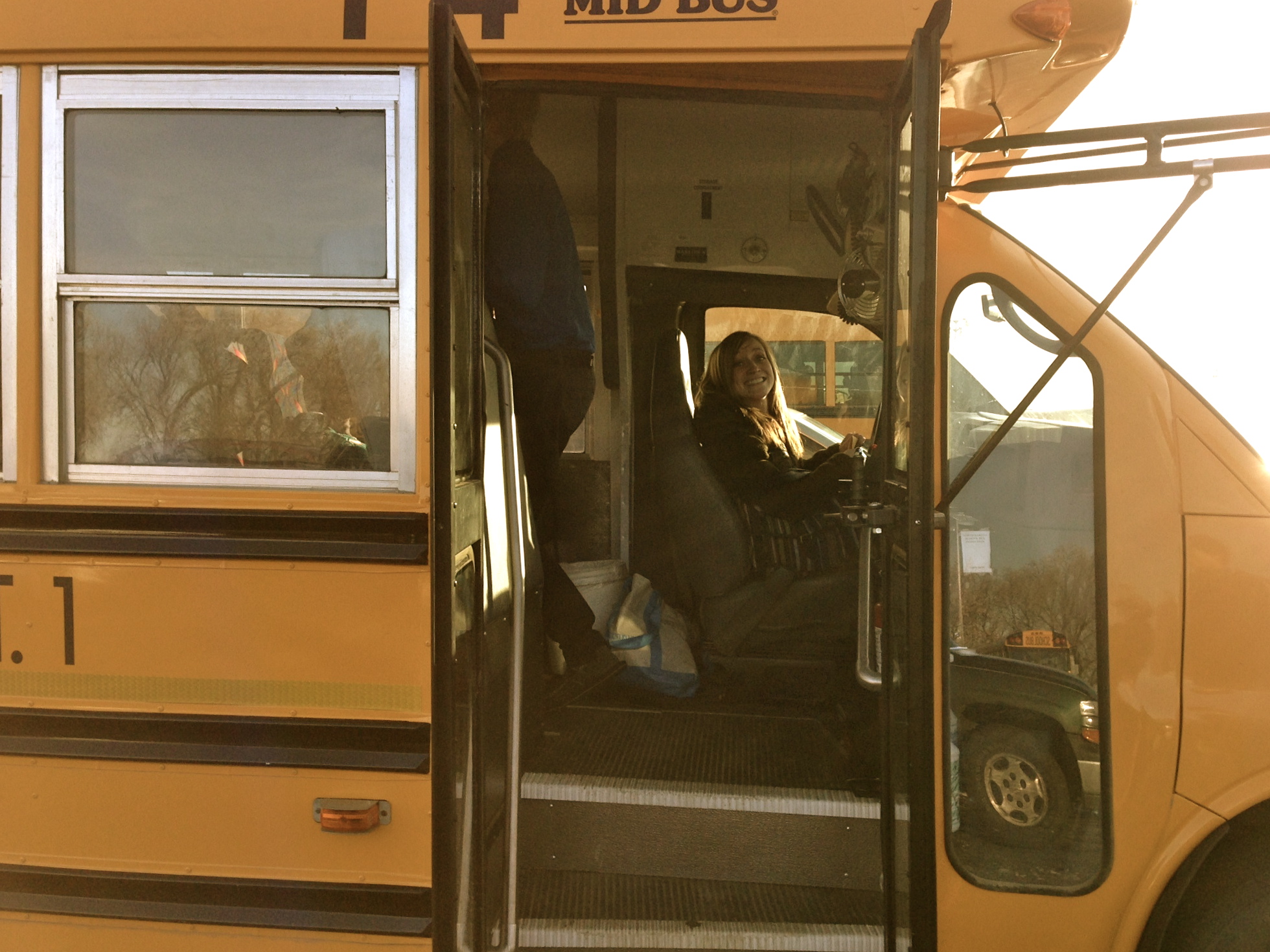
Yesterday, I got the chance to try on a new teaching hat: Driving a bus. This is not something I signed up for when I went into teaching. I think I envisioned all the neat rows of students with bright, shiny faces raising their hands and having more fulfilled lives because of my teaching instruction – the ones in the movies. I did not envision getting up at 5 a.m. on a Saturday to start a frosty yellow school bus and pick up a pile of speech kids who forget scripts and money and dress shirts at home.

But, when the athletic director informed me that I would be driving a bus to some of my speech meets, I swallowed my concern and nodded. I drive grain trucks and combines, I thought to myself. How hard can it be to drive a bus? I tried not to think of the fact that children whose parents love them deeply are a little more important that a heap of barley, and I tried not to think of the long train of oil trucks that usually accompany me to school in the morning, only yards behind my little SUV. Besides, this was one of the “short buses,” which is little more than a glorified 14-passenger van. Drivers don’t need a bus license for this kind of bus.

So instead of arguing, I got up yesterday morning at 5, drove to Watford, found my assigned bus in the bus lot, started it, scraped the frost off the windows (not an easy task when I am 5’1″ and the sad little ice scraper barely extends past my arm), messed around with the switches, figured out how to turn on the strobe lamp on top of the bus, turned on the heaters for the kids, and drove to the high school to pick them up. They piled on, faces excited for the first speech season of the year, and we took off.

And the thing is, it went just fine. The fog was a bit thick; the traffic was moderately heavy; it was early in the morning. But otherwise, I created a few rules in my mind and stuck to them:

  • Hug the white line
  • Keep distance from the oil trucks
  • Don’t let the kids know I’ve never done this before
  • Stop at railroad crossings (I only had to do this twice)
  • Avoid giving obscene gestures to jerks while driving a vehicle plastered with our school name on the side

I didn’t mind trying on another hat, in the end. It was a good day. I had to endure a few comments, of course. When I parked the bus at our destination, the driver in the bus next to me looked at me in amazement. He leaned out his window. “You’re the tiniest bus driver I’ve ever seen!” he yelled with a grin on his face. My friend Allie also about died laughing when she saw me climb into the bus at the end of the speech meet. She’s an English teacher and spent a few years in a Class B school, so if anyone understands what it’s like to get roped into things, she does. “Be good to her!” she called to my kids before snapping a picture of me in my short bus.

The best part: God rewarded me with a sunrise in the badlands on my way there, lifting the fog just enough for me to see, and a sunset in the badlands on my way back. It was absolutely breathtaking. The other best part: My kids gathered their things when I parked at the school, thanked me sincerely for taking them, proclaimed how fun it was, and went cheerfully home to their parents. They never knew all the anxiety I suffered beforehand.

Yes, it was a good day. And what would teaching be without a few more hats?

Image

Musings, North Dakota Living, Teaching

Teaching, Farming, Exasperating

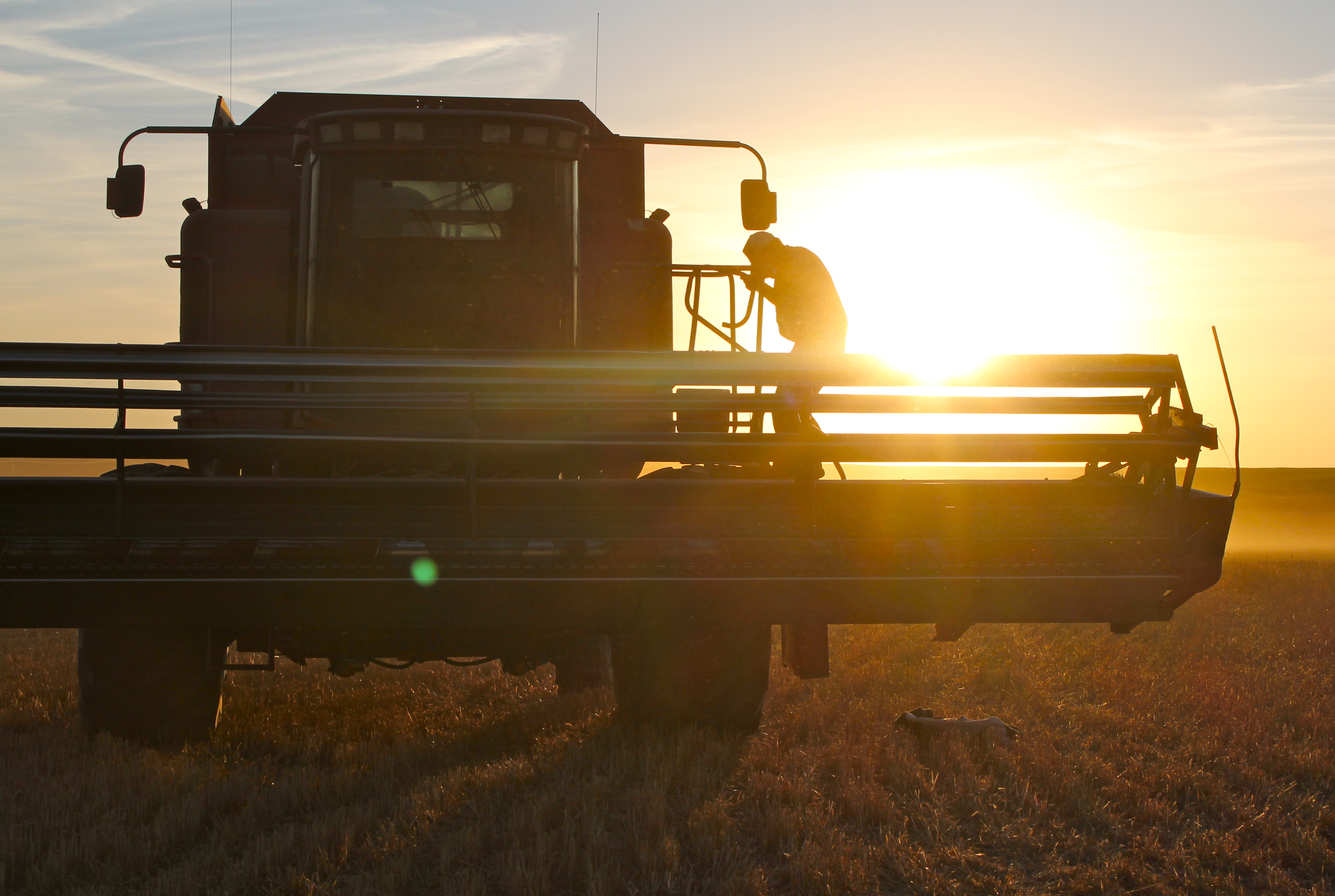
Tomorrow night, the windchill might get to 50 below. I do love winter, but when I hear things like that, I still sigh a little bit as I see a picture on the wall of us all smiling on a beautiful harvest evening. Now that I live on our farm full time, I’ve gotten to know it more completely in all four seasons, from the 50 below, to a beautiful 82 above and beyond. I’ve also had a chance to see it become ingrained into parts of my life that weren’t touched by farming before. When I used to come here, it was just for our farm and for farm-y things like horseback riding, harvest, and hunting. When I left, I went to other cities in North Dakota or Minnesota to go to school or teach school and wear non-farm-y clothes and do non-farm-y things.

Putting farming and teaching together has made some days a bit more of a juggle. My first year teaching here, harvest started one day before school did, which is pretty late for our part of the country. I usually operate a combine for my dad or brother during harvest. It’s a pretty nice job, really: I sit in my air-conditioned cab with the FM radio while I watch my brother and dad outside in the chaff, driving trucks, sweating like crazy and itching in the barley dust. Every evening, my mother brings harvest meals out to the field, and they are glorious. I mean, these are some of the best meals any of us have ever had: meatballs and mashed potatoes, French dip sandwiches, lasagna with garlic bread, homemade pizza, cold lemonade, fresh brownies. And everything during harvest tastes SO AMAZING. We are all excited for a good meal and a little desperate for my mother’s smile and cheerful conversation after hours alone in our separate cabs.

Grandpa Wayne shutting  'er down for supper
Grandpa Wayne shutting ‘er down for supper
An oldie but a goodie: The harvest crew, minus a few
An oldie but a goodie: Harvest crew, minus a few

However, this particular harvest of 2011, there were two problems. 1) My mother was already back at her school counseling job in Bismarck, and 2) I was at my own local teaching job until close to 5 every afternoon, so the bulk of the combining hours would be drawing to a close by the time I got out there. My usual role as a combine operator was not much of an option. We still had a harvest crew: My dad, Grandpa Wayne, my farming brother Danny, my college brother Tommy who hadn’t started school yet, my dad’s hired man, and our cousin. I bravely decided to take on my mother’s role as the “meal wagon.” It was no easy task. If i didn’t appreciate my mom before, I sure appreciated her now.

Oh, there was a third problem. Did I mention we were temporarily living in tiny, cheap – and I mean cheap – trailers while we waited for construction to be completed on our farmhouse? My two brothers and I were crammed into one and my father and grandfather were yards away in the other. The walls were so thin, we could hear each other walking – from next door.

My schedule for the first several weeks of school that fall went something like this: 6:30 a.m.: Wake up for school. Make coffee in the bathroom because kitchen outlets don’t work. Watch everyone else leave for harvest and be really jealous. 7:30 a.m.: Sit in oil field traffic on my way to school. 8:05 a.m. Start day of shaping young American minds. 4:45 p.m. Sit in oil field traffic on my way home. 5:15 p.m. Start supper. Curse at the tiny sink and the tiny, crooked oven. 6:30 p.m. Leave for field in rickety suburban with my coolers of food and jug of lemonade, leaving behind piles of dirty pots and pans in the tiny sink and stacked on the tiny, crooked oven. 7:30 p.m. Smile as the harvest crew thanks me over and over for my meal efforts. Watch them walk back to their combines and be really jealous.

Tommy and I combining in happier, teaching-free days

9:15 p.m. Back at the trailer. Finally finish washing piles of pots and pans in the tiny sink. Stare at schoolwork. Look outside at the sunset. Jump at the chance to help move harvest vehicles rather than do any schoolwork. 10:30 p.m. Fall into bed, exhausted. Have nightmares about what to make for dinner the next day in the tiny, crooked oven.

Every Friday at 4:30 p.m.: Finally climb back into my combine cab and bask in it until the weekend harvesting is over and I’m back to the school books.

I will say, that harvest of 2011 was pretty unique. We had never had a harvest like that before, and we will probably never have one like that again. Since then, farming still touches my teaching days now and then. Sometimes, I am asked to haul trailers of various shapes and sizes for my dad, so I drive them to school – and park a little farther away. Sometimes, I drive the rickety suburban to school so I can pick up some tractor part or trailer of various shape or size (it’s truly amazing how many trailers there are floating around our farm) while I’m in town. My few students who have spotted me in the rickety suburban found that very funny.

One time last year, I somehow found myself driving a dusty old grain truck home in my high heels with my lunchbox and stack of school books next to me. Mind you, this grain truck has shoddy brakes and questionable turn signals. I downshifted grinding, groaning gears with my cute high heels – and held my breath – for every turn. When I got to my yard, some strange construction equipment blocked my approach, so I parked the truck where I could and trudged through shin-deep mud, the result of a winter thaw. My thoughts toward my practical farmer father were not particularly warm enough to thaw anything at that moment, but I got over it. I also got smarter: I wear boots to school now and pack my high heels in my school bag instead, anytime from November until April or whenever the snow melts. Or anytime there’s even the slightest possibility that I might be driving a grain truck. Then again, I usually can’t predict such things. Ah, the combination of teaching and farming… Exasperating? At times. Worth it? No question about it.

Just stay there until school is over, please!
Just stay there until the school year is over, please!
Musings, North Dakota Living

The Irony of Empty

The Merriam-Webster Dictionary defines “empty” as “containing nothing; not occupied or inhabited.” In 2008, National Geographic printed an article titled “The Emptied Prairie” by Charles Bowden, who discourses poetically on the fall of the wide North Dakota plains into decay, deserted by its human inhabitants. It opens: “In the early 20th century, railroads lured settlers into North Dakota with promises of homesteads. Towns were planted everywhere. Houses rose from the sweep of the plains, many, like this one, with a story no one can trace. People believed rain would follow the plow. But they were wrong.” The sub-heading reads, “North Dakota ghost towns speak of an irreversible decline.”

Intriguing…

In the article, Bowden elaborates on the population decline that had plagued North Dakota for years, especially in its rural areas. It describes the state of the prairie, mentioning towns that “fall one by one like autumn leaves in the chill of October.” He paints a chilling and lonely picture, describing deer bones, rusting cars, and scattered remnants of human life. Of course, the photography accompanying the article just has to include a creepy picture of an abandoned doll staring through glass eyes covered with dirt and spider webs. There is nothing that speaks “despair” like a broken doll. It reminds me of Titanic documentaries I’ve seen.

The article also mentions Epping, a tiny town in western North Dakota, which then had a population of 75 according to the article. Ironically, Epping is located only about 20 miles northeast of Williston, placing it right near the hub of the Bakken oil field. Today, I bet the residents of Epping would have something different to discuss besides the emptiness of the prairie around them.

An especially interesting quote in the article reads, “That’s the rub of rural North Dakota, a sense of things ebbing, of churches being abandoned, schools shutting down, towns becoming ruins.” I look at the new students entering my high school weekly and new buildings popping up in Watford City daily, and realize just how ironic this article really is. The article does mention oil resources, but it was printed before our oil boom really took off, so author Bowden could not have realized just how wrong he was about to be. It’s not even that he was “wrong.” There are abandoned farmsteads scattered across the prairie across the Midwest – they are one of my favorite photography subjects. I’ve always been fascinated with the dreams left behind by homesteaders. It’s also true that our population was on the decline for years, especially among young people entering the work force. But I just love the irony of this article: our area of North Dakota, a state barely on the map until recently, is not exactly empty anymore.

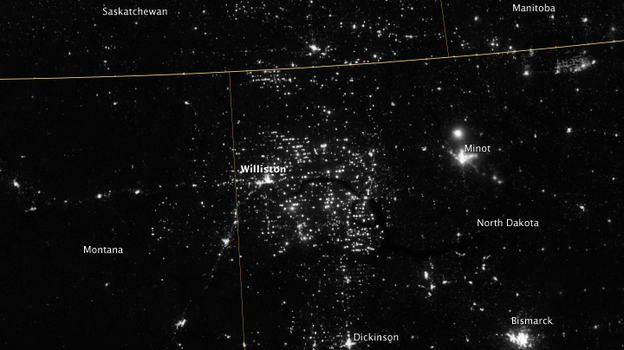
In fact, western North Dakota has made it onto a much bigger map: the famous satellite light map. Some of you may have seen this before. It’s a pretty cool satellite illustration of urban areas at night. The area in and around North Dakota used to be quite dark, considering it was, well, rather empty. Fargo had a sort-of bright spot. Minneapolis-St. Paul was probably the closest thing to an actual bright spot. But NPR’s website recently published a piece called “A Mysterious Patch of Light Shows Up in the North Dakota Dark.” The satellite light map now shows a noticeable bright spot right in western North Dakota. Unlike other light patches, this one is made not of city lights but oil activity, particularly rigs and flares.

Look below:

Illustration by NPR/NASA

An excerpt from the accompanying article reads, “Six years ago, this region was close to empty. The few ranchers who lived here produced wheat, alfalfa, oats, and corn. The U.S. Geological Survey knew there were oil deposits under ground, but deep down, 2 miles below the surface… There are now so many gas wells burning flares in the North Dakota night, the fracking fields can be seen from deep space.”

Here is a closer view:

Suomi NPP Satellite/NASA Earth Observatory

These two articles show two very opposite sides of western North Dakota: the first, the fearful isolation of a deserted prairie, and the second, the overwhelming activity created by progress. The most ironic thing is, these articles are only a few years apart. Who would have known that “empty” could change so fast?

If I had to be honest, sometimes I kind of miss empty. I miss the dark. I miss the lonely openness. But a wise five-year-old once told me, “You get what you get and you don’t throw a fit.” So rather than throw a fit, I try to remember the good that is happening here and still appreciate the irony of “empty.”

You can find the original National Geographic article here.

And the original NPR blog here.

Musings, North Dakota Living, Teaching

I Say Creek, You Say Crick

One of my favorite things about teaching high school students from all locations is the arguments over pronunciation and word choice. Not that these arguments are limited to high schools students – just the other night at the lounge where I work, a customer made me repeat the word “bag” after I said it. (Yes, I’m from North Dakota, so a bag is a “bay-g.”) He thought it was quite entertaining.

Numerous times over the last year and a half, I have had to practically break up fights in class over the simple matter of how one pronounces a word, or what one calls a simple object. Here is how my last one went. I was in the middle of grading while the students were working, when suddenly a freshman boy in the front of the room erupted, “YOU CAN’T CALL IT THAT! THAT IS THE DUMBEST THING I HAVE EVER HEARD!” I looked up from my grading, surprised, trying to see what was going on before I scolded him.

The girl he was sitting by answered the question for me. She tossed her hair and replied, “I can too. It’s a creek, not a crick. Isn’t that right, Miss D.?”

The kid turned on me in anger. “Miss D., tell her it is a crick and not a creek!”

I tried to diffuse the situation. “Actually, it depends on where you’re from. Some people just pronounce things like this differently. But I’m from Bismarck, and I actually say creek.”

The kid rolled his eyes and repeated, “That’s the dumbest thing I’ve ever heard. It’s a crick!”

Some of my other favorite language issues that have come up recently:

  • Coyote (no e sound at the end) vs. Coyotee (long e at the end). If you pronounce the long e at the end, you are definitely not from the area.
  • Syrup (pronounced seer-up) vs. Syrup (pronounced sirr-up) vs. Syrup (pronounced surp). Since when is syrup one syllable? But for some around here, it is.
  • Crayon (pronounced cray-on) vs. Crayon (pronounced cran). Ok, so I am guilty of shortening this one to one syllable. But it just seems so much easier to color with “crans” when you are six! I guess some habits die hard.
  • Pop vs. Soda. I had to calm a Southern transplant kid down for this one too. “Pop” is North Dakota speak.
  • And my all time favorite: Slushburgers. This is a northwestern North Dakota thing. I have never been able to find any other location that uses this term, not even slightly farther east or south in North Dakota.

What is a slushburger, you may ask? You probably know it by one of its more common names: a sloppy joe or a barbeque. A gooey, amazing sandwich of beefy, tangy goodness. (Yes, I may have a thing for sloppy joes.) It wasn’t until I attended a summer baseball game in Watford City when I was in high school that I had ever seen the term “slushburger.” When I was in college, my Watford City boyfriend and I made this item for lunch one day, and we got into an argument in the grocery store over what our concoction should be called. Apparently he won, because I found our recipe a few months ago, and it was titled “Slushburgers” – in my handwriting. I did NOT remember losing that argument. (Drat.)

Then, I came to work in northwestern North Dakota, and there it was. Slushburger. Right there on the high school lunch menu. Now, when I take lunch count in the morning, I ask my homeroom kids if they want “slushburgers” or salad bar. Yes, I’ve succumbed. It’s just easier that way. It gets me out of several-minute-long arguments with all of the local kids who would be outraged at my lack of respect for the term. But I still grin a little inside when some new kid from Washington yells out, “What in God’s name is a slushburger?!”

Musings, North Dakota Living

Small Talk

We’ve all been through it. A conversation lulls; an awkward silence ensues. What do I say next? we wonder, so naturally, we fall back on the weather: “I heard there is a storm coming this weekend,” or, “Can you believe how warm it is for December?” But here in the Northern Plains during the long, cold winter months, weather is more than just small talk. We talk about the weather with a little touch of pride. Where else do grandparents drive 60 miles an hour through raging blizzards without batting an eye?

I just adore winter. Winter is awesome. I love the extremities, and North Dakota always goes all out in that regard. Right now as I write, it is -2 degrees outside. Of course, sometimes winter can be a real pain in the arse. I have been knocked out for weeks with some type of horrible flu of death/evil cold virus/muscle-weakening disease of wicked proportions. Twice last week, I rolled in to school from my 12-mile drive a half hour late, right when the first bell was ringing, because pickups were sliding all over the highways. Two nights ago, I came home from dinner in town with friends to find that I couldn’t see the edge of my highway through the angry swirling snowflakes storming across the road. I went by pure instinct, ended up on the shoulder only once and breathed a sigh of relief when I thought I saw the blurry edges of the mailbox marking the driveway.

Although it was below zero after school on Friday, I grabbed my camera and trudged through the snow to capture a few pictures before the light faded and my fingers froze off. I was supposed to be at school taking tickets for a boys basketball game, but the opposing team couldn’t make it through the blizzard and the game was postponed. So I took advantage of my rare opportunity to be home before sunset and captured just a little taste of the extremities around me.

Drivers around here lately have been seeing a lot of this:

IMG_2155

Does this look like a desolate wasteland? Ok, yes, right now it pretty much looks like the movie Fargo. I still like it, though. And I’m not the only one.

Lucy plays in the snow:

IMG_2164

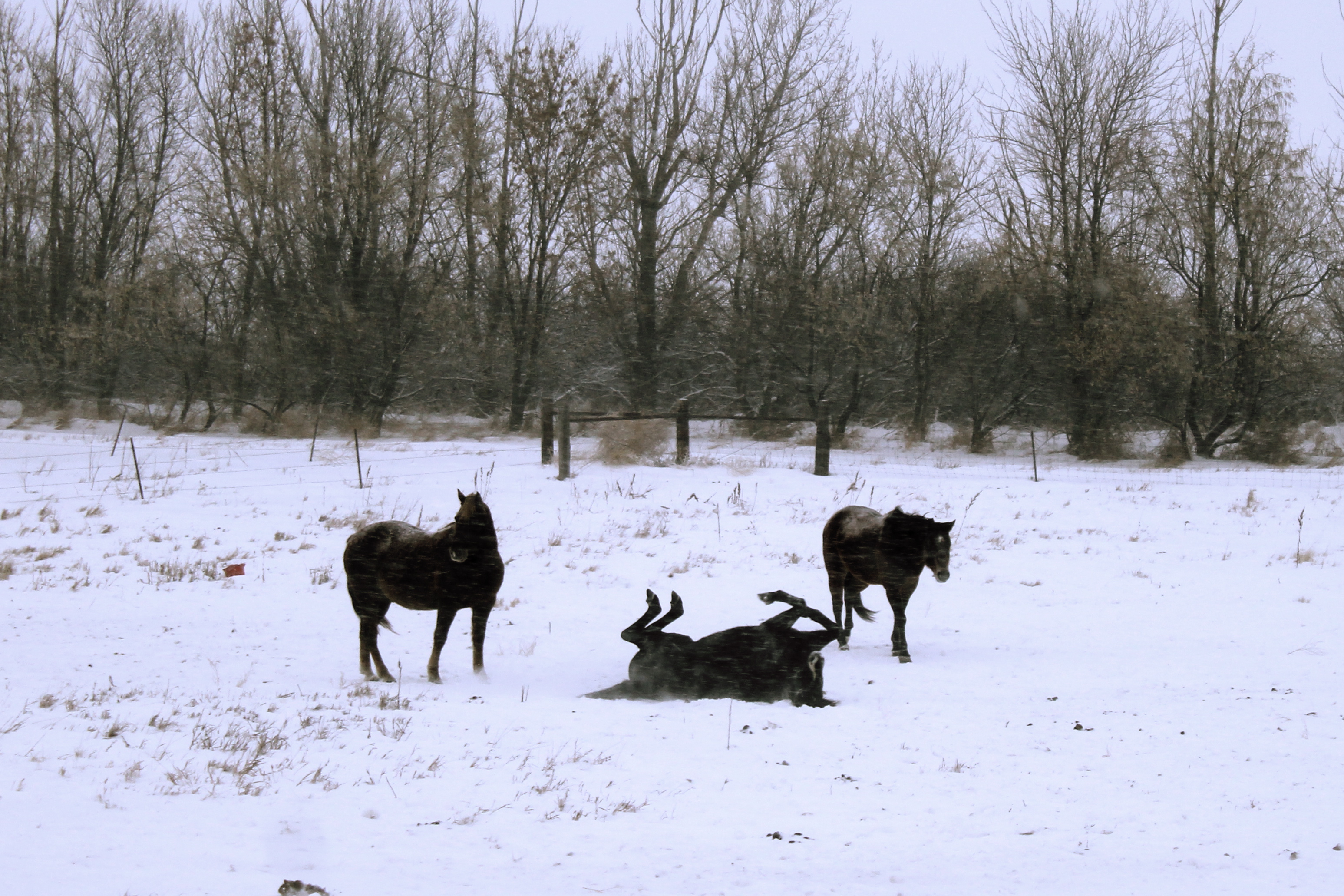
Blackjack rolls in the snow:

IMG_2186

Chico explores in the snow:

IMG_2196

And Jake eats horse poop in the snow. Everyone is happy!

IMG_2199

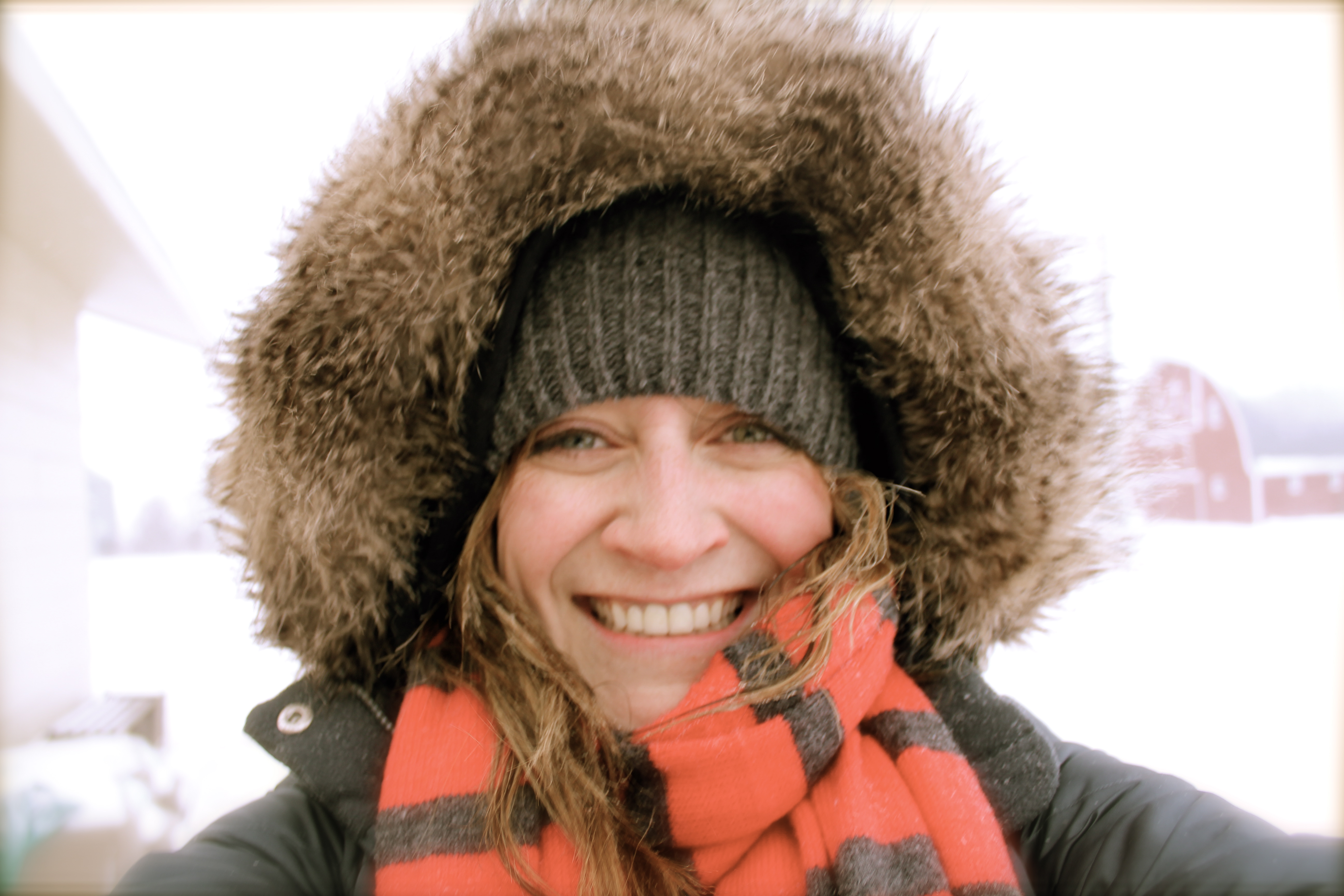
And the photographer? Well, a little winter exploring always puts a smile on my face. Even if it’s a bit of a frozen one.

IMG_2201

The weather might be just small talk, but when it’s this extreme, it’s a little more than that. It’s a bonding experience with people around us going through the same thing, and with our animals out playing in the snow. If we can survive this, and if we can all make it spring together, then we can worry about what to talk about next.